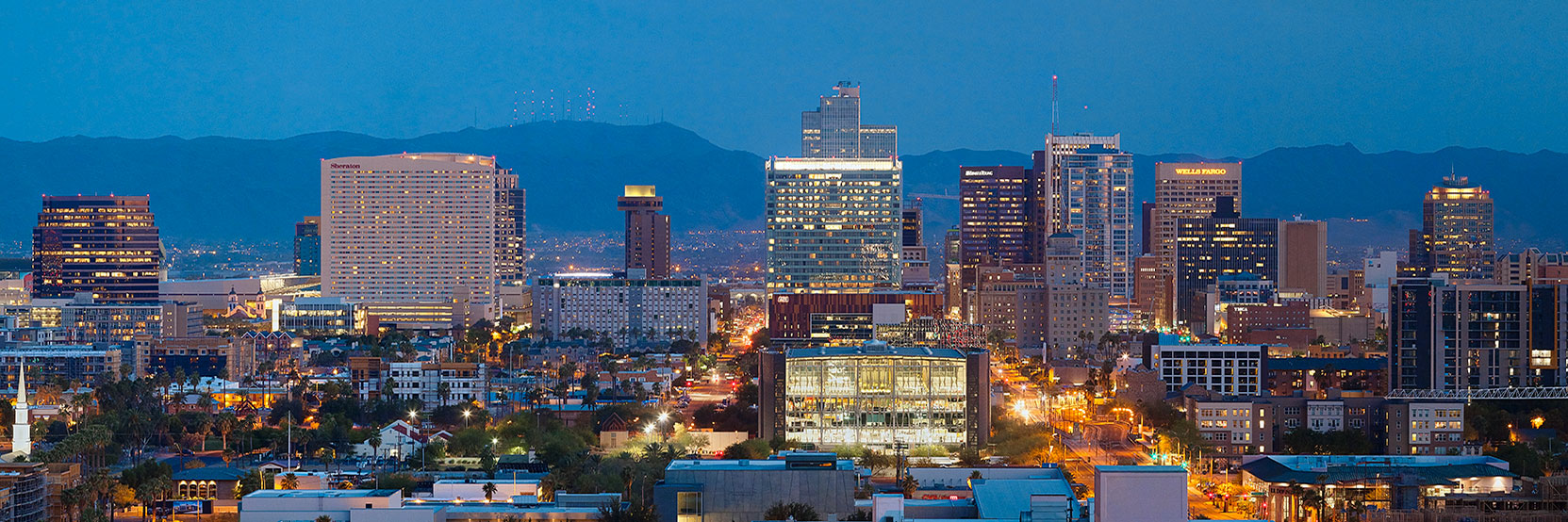
Downtown Phoenix is the compact core where the Phoenix Convention Center, the Sheraton Phoenix Downtown, Chase Field, and Footprint Center all sit within a few blocks of each other. That density is unusual for the region: most Phoenix-area programs have to shuttle attendees between a hotel and a venue, while a downtown build can often route foot traffic instead, provided the schedule accounts for street closures on event nights.
Light rail runs directly through downtown and connects to Tempe and parts of Mesa, which matters for programs drawing attendees from outside the immediate hotel block. That transit access, paired with the convention center's meeting-room stack above the exhibit floor, is the main reason downtown remains the default booking for a conventional trade show tied to Scottsdale-based planning.
The tradeoff for that density is scheduling friction. Diamondbacks games at Chase Field and Suns games at Footprint Center pull traffic and parking demand into the same streets a convention center load-in needs, so a downtown build date has to be checked against both team calendars before a dock window gets locked in.
Execution priorities
- Exhibit floor and meeting-room stack at the Phoenix Convention Center
- Walkable headquarters hotel at the Sheraton Phoenix Downtown
- Arena-adjacent activations near Chase Field and Footprint Center
- Light rail access for attendees outside the hotel block
- Event-night traffic and dock scheduling around downtown streets
How Downtown Phoenix fits the Scottsdale market
Downtown Phoenix is the venue-dense counterpart to a Scottsdale-based program: Scottsdale supplies resort ballrooms, breakout meeting space, and hotel inventory outside peak convention rates, while downtown supplies the exhibit-hall and arena square footage Scottsdale properties don't carry. Programs that split time between the two are common, and the twenty-minute freeway link along Loop 101 to State Route 51 to Interstate 10 is what makes that split workable.
What makes downtown specifically different from the rest of Phoenix is walkability. A show anchored at the convention center with its headquarters hotel next door can run a program without a shuttle fleet, something that is not true of a fairgrounds or north Phoenix booking.
Phoenix Convention Center exhibit floor
The convention center's exhibit halls sit at street level with dock access off the building's service streets, and meeting rooms stack above the show floor for breakout sessions and general assembly. Booking here is the standard move for a conventional trade show or conference format that needs both large open floor space and a full slate of session rooms in one building.
Because the center hosts concurrent citywide events regularly, hall assignments and load-in windows should be confirmed early. A hall on the building's east side can have a materially different dock walk than one on the west side, which affects how a drayage plan gets built.
Sheraton Phoenix Downtown as headquarters hotel
The Sheraton sits close enough to the convention center that attendees can walk between general sessions and the show floor without a shuttle, which is the main reason it remains the default headquarters hotel for downtown-anchored programs. Room block negotiations should be timed against the convention center's own booking calendar, since large citywide events can absorb downtown hotel inventory well in advance.
For a program that wants a private opening reception or executive dinner separate from the main show floor, the hotel's own function space is often easier to lock in on short notice than additional convention center rooms.
Chase Field and Footprint Center as activation venues
Both arenas sit inside the downtown grid, close enough to the convention center that a branded activation or product reveal could plausibly run at either alongside a convention center program, though each has its own load-in rules tied to the Diamondbacks and Suns schedules. A build date has to clear the team calendar before anything else is planned.
Even for shows that never book either arena directly, their game schedules still matter, since a home game night fills downtown parking garages and adds traffic that a convention center load-in or attendee arrival plan needs to account for.
Light rail and attendee access
Downtown Phoenix is the one district on this map with direct light rail access, running through the convention center area and out toward Tempe and Mesa. That gives programs drawing attendees from across the Valley, beyond only Scottsdale, a transit option that avoids downtown parking pricing entirely.
For exhibitor and crew logistics rather than attendee arrival, light rail matters less than dock access and parking garage proximity, but it is worth noting in any attendee-facing communication since it changes how far people are willing to travel to a downtown session.
Freight, drayage, and dock scheduling downtown
Drayage inside downtown Phoenix runs through the convention center's own dock system, which is separate from arena loading docks even though the buildings sit close together. A freight plan should specify convention center hall number rather than just downtown as a destination, since trucks can otherwise be routed to the wrong service street.
Material handling rates and forklift availability are set by whichever general contractor holds the specific show, so confirming that relationship early avoids surprises once freight starts arriving on the dock.
Because the convention center, both arenas, and nearby hotels sit close together, more than one event can be drawing on the same downtown streets at once. Checking the convention center's own event calendar alongside the Diamondbacks and Suns schedules before finalizing dates helps avoid a week where three separate crowds are competing for the same parking garages and dock access.
Drive times from Scottsdale to downtown
The standard route from central Scottsdale runs Loop 101 south to State Route 51 south to Interstate 10, arriving downtown in roughly twenty to twenty-five minutes off-peak. Morning and evening commute traffic extends that window, and a Diamondbacks or Suns home game adds further congestion on the same downtown exits.
Because downtown parking garages fill quickly on event nights, a crew or attendee arrival plan based on a normal weekday estimate can run into real delays if a game or concurrent citywide event lands on the same date.
Parking, garages, and event-night pricing
Downtown parking runs almost entirely through paid garages near the convention center and both arenas, with rates that increase on game nights and during large citywide events. A program's parking guidance to attendees should account for that variability rather than quoting a flat rate that only applies on an ordinary weekday.
Crew parking for load-in and load-out should be arranged separately from attendee parking, since dock-adjacent spaces are limited and get claimed quickly by whichever show is building on a given day.
Choosing downtown for a program
Downtown Phoenix is the right fit for a program that wants exhibit-hall square footage, a walkable headquarters hotel, and light rail access for attendees traveling from outside the immediate area, all inside one compact grid rather than spread across a shuttle route.
It is a weaker fit for anything needing large outdoor space or multiple simultaneous halls under one roof, where the fairgrounds corridor further north generally serves the format better than trying to fit it into a downtown building designed for a different kind of show.
A useful early step is to walk the specific hall being considered rather than relying on a floor plan alone, since column placement, dock distance, and ceiling height can vary enough between halls to change how a booth layout actually performs on show day.
Frequently asked questions
What makes downtown Phoenix different from the rest of the Phoenix venue map?
Density and walkability. The convention center, its headquarters hotel, and both major arenas sit within a few blocks of each other, so a downtown-anchored program can often run without a shuttle fleet, which is not true of a fairgrounds or north Phoenix booking.
Do Diamondbacks and Suns game nights affect a downtown trade show?
Yes. Both teams draw traffic and fill downtown parking garages on game nights, which affects dock access, attendee parking, and general downtown congestion. Any build date should be checked against both team calendars before locking a load-in window.
Is light rail useful for a downtown trade show?
For attendees, yes. Light rail runs through the downtown area and connects to Tempe and parts of Mesa, giving attendees from outside the immediate hotel block a transit option that avoids downtown parking pricing entirely.
How long is the drive from Scottsdale to downtown Phoenix?
Roughly twenty to twenty-five minutes off-peak via Loop 101 to State Route 51 to Interstate 10. That window extends during commute hours and on nights when a Diamondbacks or Suns game is also drawing traffic downtown.
Can a downtown Phoenix program also use Chase Field or Footprint Center?
Some do, particularly for branded activations that want an arena setting near a convention center program. Availability at either building is governed entirely by the home team schedule, so that has to be confirmed first.
Is downtown Phoenix a good fit for a large expo-format show?
Not usually. Downtown's strength is a conventional exhibit hall with meeting rooms and walkable hotel access. A show needing very large open floor area or outdoor demonstration space is generally better served by the Arizona State Fairgrounds corridor.