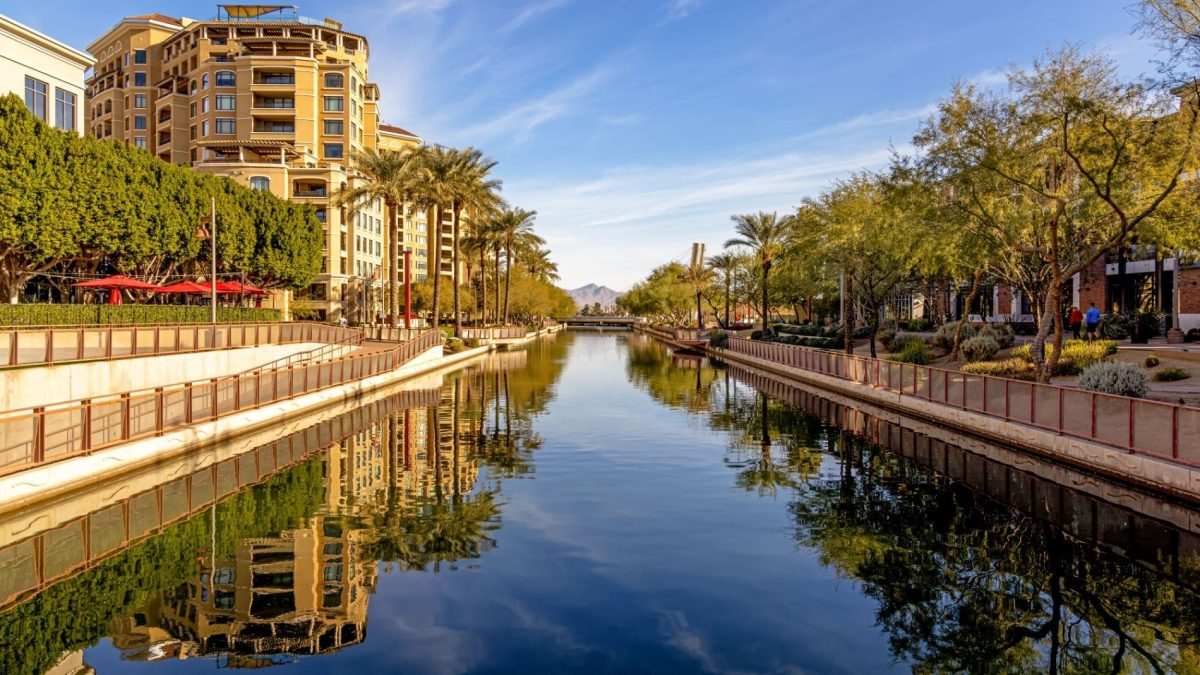
Old Town Scottsdale is the city's original downtown, a compact grid of galleries, restaurants, and boutique hotels south of the Loop 101 that trades expo-hall scale for the kind of walkable evening program that resort corridors cannot offer on their own.
The district's anchor venue is the Scottsdale Center for the Performing Arts, a civic theater and gallery complex that hosts conferences, galas, and cultural programming rather than trade-show freight. Everything around it, the Old Town hotel cluster, Fifth Avenue's shops, the Entertainment District's bars and restaurants, exists to support a program that wants its attendees on foot after hours.
For anything that needs true expo capacity, drive-in freight, or a large exhibitor footprint, Old Town is the wrong district and the program should look north toward WestWorld instead. Old Town's strength is a tight, walkable, photogenic setting for a mid-size conference, launch event, or evening reception.
Execution priorities
- Walkable venue and hotel layout for evening programs
- Scottsdale Center for the Performing Arts as anchor venue
- Boutique hotel blocks versus large convention hotels
- Access to Talking Stick Resort for overflow capacity
- Fit for galas, launches, and cultural programming
What makes Old Town different
Old Town Scottsdale predates the resort corridor by decades, and the district still carries that older, denser grid of storefronts, low-rise buildings, and narrow streets rather than the sprawling campus layout common further north. That density is an asset for programs designed around walking between venues rather than shuttling.
It is a liability for anything that needs a loading dock, a large uninterrupted floor plate, or overnight parking for freight trucks, none of which the district offers in meaningful quantity.
The tradeoff shows up most clearly in parking. Old Town relies on a mix of surface lots, structured garages, and street parking rather than the single large surface lot a resort or expo venue would offer, so attendee parking needs to be planned as its own line item rather than assumed.
The Scottsdale Center for the Performing Arts
The Center is Old Town's only purpose-built event venue at any real scale, combining a theater, gallery space, and outdoor civic plaza that suit conferences with a general session and cultural or arts-adjacent programming particularly well.
It is not sized or built for a trade-show floor. Programs that need exhibitor booths alongside a general session typically use the Center for keynotes and receptions while sourcing booth space elsewhere, or they scale the exhibitor component down to fit the venue's actual footprint.
Hotel and lodging character
Old Town's hotel stock leans boutique, independent, and design-forward rather than convention-scale. That is an advantage for a program that wants a distinctive setting and is willing to work across two or three smaller properties instead of one large block.
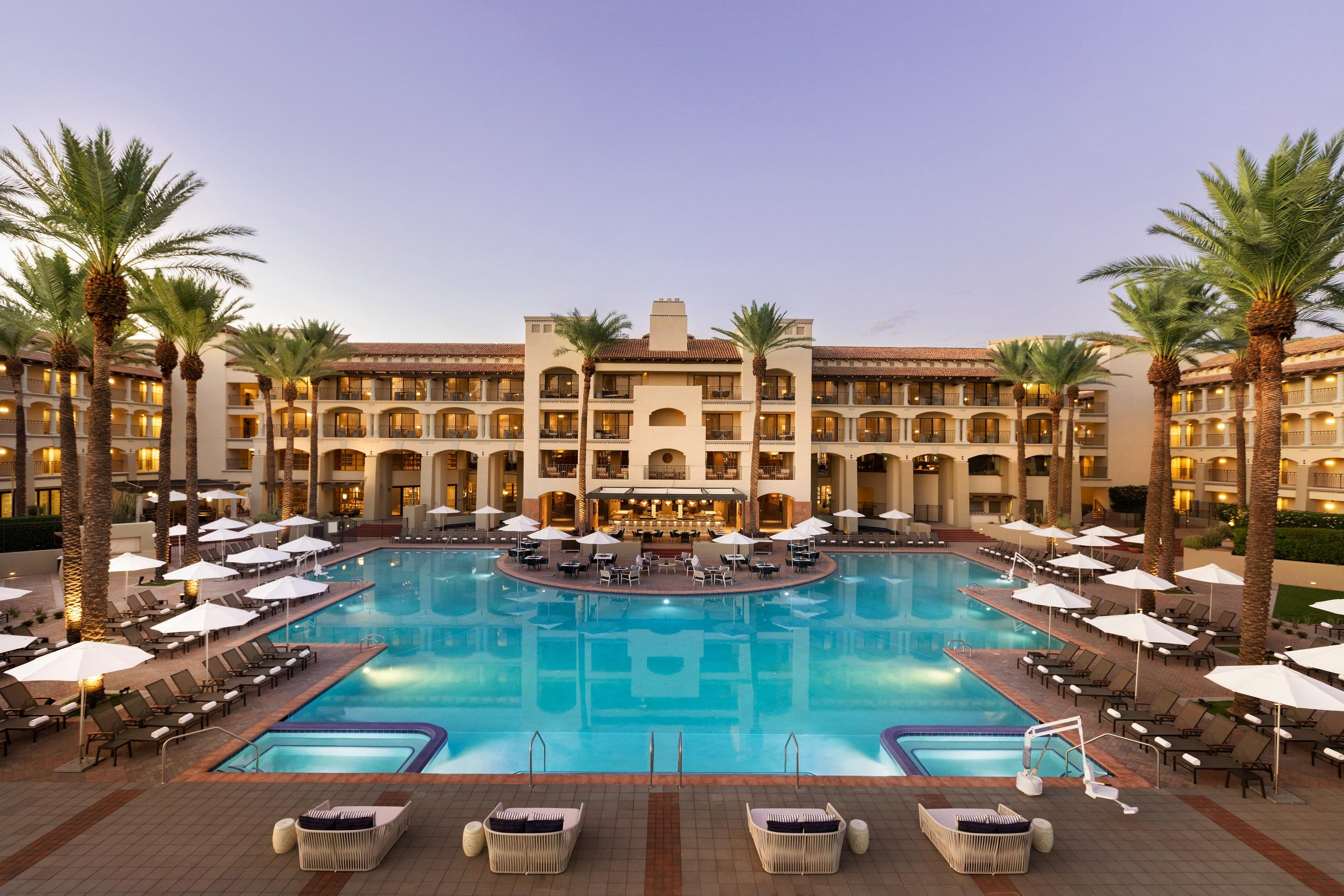
When a program needs a bigger single-property block than Old Town's boutique inventory can absorb, Talking Stick Resort and the Grand Hyatt Scottsdale Resort sit close enough, a short drive east, to extend the room count without losing much of Old Town's walkable character for daytime programming.
Evening programming and the Entertainment District
Old Town's restaurant and bar density, concentrated in the Entertainment District along Scottsdale Road and Indian School Road, is one of the strongest reasons planners choose the district for a gala, an awards dinner, or an informal networking evening.
Attendees can move between a hotel, a dinner venue, and a late program on foot, which removes the shuttle logistics that would otherwise be needed in a more spread-out district like North Scottsdale or the Airpark.
That density also means a single evening can span multiple independent venues, a dinner at one restaurant, drinks at a rooftop bar a block away, and a closing reception at a gallery, without ever needing a vehicle, which is difficult to replicate anywhere else in the metro.
Freight and move-in reality
Because Old Town's streets and buildings were never designed with loading docks, freight for anything beyond a modest exhibitor footprint has to be scoped carefully, with load-in windows coordinated around the district's traffic and limited truck staging.
Programs with heavy freight needs are usually better served by routing that portion of the event to WestWorld or a resort with a proper loading dock, then using Old Town only for the parts of the program that do not require it.
A common split is to run the exhibitor floor at WestWorld earlier in the week and close the program with an Old Town dinner or reception, which lets the event use each district for what it does best rather than compromising on both.
Planning priorities to set early
The first question for an Old Town program is whether the event is primarily a conference and social program, in which case the district is a strong fit, or whether it has a real exhibitor component, in which case the footprint needs to be checked against the Center's actual capacity early.
Second is hotel strategy: confirming whether the boutique inventory covers the block or whether Talking Stick and the Grand Hyatt need to be added from the start rather than as a late fallback.
Third is parking and ground access. Old Town's mix of surface lots and garages needs to be mapped against expected attendance early, since a large program can genuinely exceed the district's convenient parking supply on a busy weekend.
Budget, scheduling, and risk controls
Old Town's peak season overlaps with the rest of Scottsdale, roughly October through April, and the district's popularity for weddings and social events during that window can make hotel and venue availability tight on top of the general seasonal pricing pressure.
Booking the Center for the Performing Arts and the primary hotel block early is the main risk control, since both tend to fill for the strongest fall and spring dates well ahead of the event.
A shoulder-season date, roughly May through September, generally opens up more boutique hotel inventory and gives more flexibility on venue timing, though summer heat can push programs toward evening start times rather than daytime outdoor components.
What a strong brief should include
A useful first brief for an Old Town program should be explicit about how much of the event is conference versus social versus exhibitor, since that ratio drives whether the Center alone is sufficient or additional space is needed.
- Split between general session, exhibitor space, and social program
- Expected attendance and preferred hotel radius
- Any freight or booth requirements beyond a light footprint
- Preferred dates relative to Scottsdale's fall and spring peak
Nearby alternatives and when to consider them
South Scottsdale sits just south of Old Town and offers a similar hotel radius with easier freight access for programs that need more flexibility than the district's civic core allows.
For anything that has outgrown Old Town's scale entirely, WestWorld of Scottsdale to the north is the natural next step, trading the district's walkability for expo-grade capacity.
Frequently asked questions
Can Old Town Scottsdale host a trade show with exhibitor booths?
On a limited scale through the Scottsdale Center for the Performing Arts, yes, but the district is not built for a large exhibitor floor. Programs with a significant booth component usually pair Old Town for keynotes and socials with WestWorld or another expo venue for the show floor itself.
Is Old Town walkable enough to skip a shuttle program?
For an event contained within the district's hotel and restaurant cluster, generally yes, since most Old Town hotels sit within a ten-minute walk of the Center. Once the room block extends to Talking Stick Resort or the Grand Hyatt, a shuttle becomes worthwhile even though both are a short drive away.
What kind of hotel inventory does Old Town offer?
Mostly boutique and independent properties with distinctive design rather than large convention-scale hotels. That works well for programs comfortable splitting a block across two or three properties rather than needing a single dominant hotel.
How does freight work for an Old Town event?
Carefully and on a limited scale. The district's older streets and buildings were never designed with loading docks, so freight beyond a light exhibitor footprint should be routed to WestWorld or a resort with proper dock access instead.
When is Old Town's busiest season?
Roughly October through April, the same window as the rest of Scottsdale, with added pressure from the district's popularity for weddings and social events during the strongest fall and spring dates.
What should be confirmed before requesting a quote for an Old Town venue?
The split between conference, social program, and any exhibitor component, plus expected attendance and preferred hotel radius. Those facts determine whether the Center for the Performing Arts alone covers the program or additional space nearby is needed, and whether parking should be scoped as a separate line item.