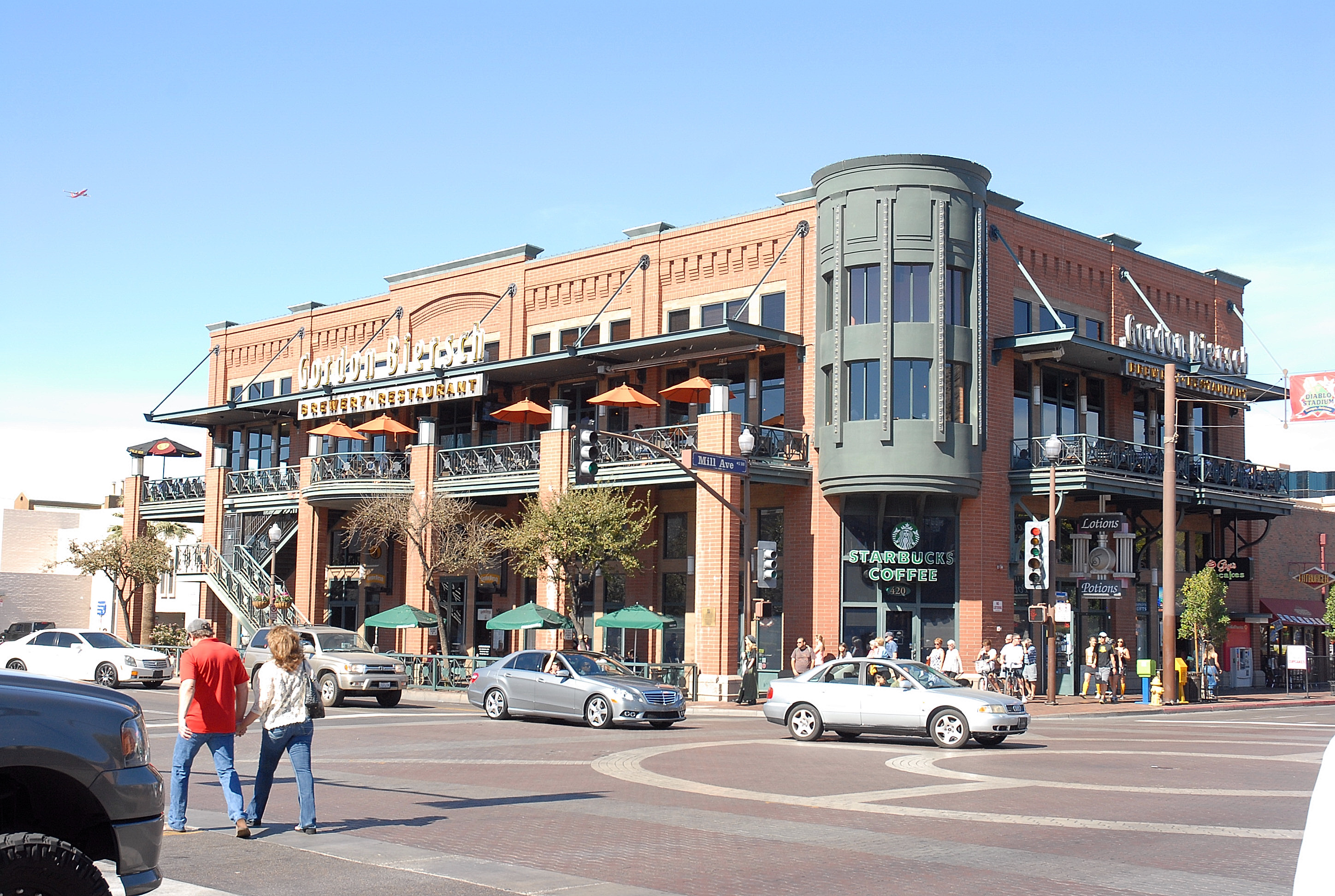
Downtown Tempe is the dense retail and restaurant core that lines Mill Avenue, running from the light rail line down toward Tempe Town Lake and the ASU campus edge. It is the single most walkable pocket of the whole Scottsdale-area market covered here, and that changes what a downtown Tempe program can ask of its attendees without a shuttle plan.
Tempe Mission Palms Hotel sits directly in this district, which means downtown Tempe is less a feeder neighborhood and more the venue's own front door. Exhibitors staying a few blocks away can move booth freight on a cart rather than a truck for last-minute items, and attendees can eat, socialize, and sleep without leaving a six-block radius.
That compression is the district's main selling point and its main constraint. Street parking and loading zones are tight relative to a suburban site, so programs based here need a tighter move-in schedule and more coordination with the city on any street closures than a program routed straight to a standalone convention hall.
Execution priorities
- Tempe Mission Palms as the walkable anchor venue
- Mill Avenue dining and evening reception options
- Light rail access at the Mill Avenue/3rd Street station
- Compressed load-in windows on narrow downtown streets
- Overflow routing to Phoenix Convention Center or WestWorld
How downtown Tempe differs from the wider city
The broader city of Tempe stretches well past this corridor into residential and light-industrial areas near the freeway, but downtown Tempe itself is the six-to-eight block district bounded roughly by Mill Avenue, University Drive, and the lake. Programs describing themselves as 'in Tempe' are usually, in practice, describing this district specifically.
That narrower footprint means walking distance, not driving distance, is the right way to think about logistics here. A downtown Tempe program plans around foot traffic between hotel, restaurant, and ballroom rather than parking-lot capacity and shuttle timing.
It also means the district absorbs foot traffic from ASU students and Mill Avenue's regular retail crowd during a show, which can work in a program's favor for public-facing consumer events but needs to be planned around for closed, badge-only programs.
Tempe Mission Palms in the downtown footprint
Tempe Mission Palms Hotel occupies a full block on Mill Avenue and functions as downtown Tempe's only true event venue, with ballroom and meeting space that suits corporate conferences, association meetings, and sponsor programs at hotel scale.
Its courtyard and breakout rooms give a downtown Tempe program room to run a general session alongside smaller workshop tracks, which is useful for the mixed corporate-and-academic crowd this district tends to draw.
Because the hotel sits inside the district rather than at its edge, guests staying at nearby Mill Avenue properties can reach the ballroom without a shuttle, which is a genuine scheduling advantage over a suburban hotel-and-venue split.
Dining and evening receptions on Mill Avenue
Mill Avenue's restaurant density is a real asset for evening programming. A downtown Tempe program can walk a group from the ballroom to a private dining room or rooftop patio a few blocks away without booking transportation, which most other locations in this market cannot offer.
That density also means reservations fill fast during ASU home-game weekends and graduation periods, so evening receptions tied to a downtown Tempe show should be booked well ahead of the date rather than left to the week of the event.
For sponsor dinners specifically, several Mill Avenue properties can handle private groups of fifty to a hundred, which fits most mid-size trade show sponsor lists without needing an offsite venue.
Load-in on narrow downtown streets
Freight and production trucks working a downtown Tempe program have less room to stage than at a suburban venue, since Mill Avenue and the side streets around Tempe Mission Palms carry regular retail and restaurant traffic on top of event move-in.
We typically coordinate a city street-closure permit for larger move-ins, scheduling deliveries in a tighter window than a standalone convention hall would require, and staging held freight offsite until the confirmed dock time.
Smaller crews handling booth kits and signage can generally use a hand cart from a nearby parking structure, which keeps costs down for programs that do not need a full production truck at all.
Light rail and attendee access
The Mill Avenue/3rd Street light rail station sits inside the district, giving attendees a direct transit option from Phoenix Sky Harbor, downtown Phoenix, and points along the line without needing a rental car or rideshare.
For a program pulling attendees from around the valley rather than just the immediate area, that transit access can meaningfully reduce parking demand at the hotel and simplify the attendee-arrival instructions we send out ahead of the show.
It also gives out-of-town attendees flying into Sky Harbor a fast, low-cost way to reach downtown Tempe directly from the airport, which is worth calling out in pre-event communications.
Parking realities in the district
Structured parking garages serve Mill Avenue and the hotel, but surface capacity is limited compared with a suburban resort or convention campus, and weekday ASU class traffic adds real congestion during peak hours.
Programs expecting significant drive-in attendance should reserve parking blocks in advance and communicate garage locations clearly, since street parking alone will not cover a mid-size event.
Weekend programs generally have an easier time, since ASU class traffic drops off and Mill Avenue's own visitor parking is less contested outside of home-game weekends.
When downtown Tempe outgrows its footprint
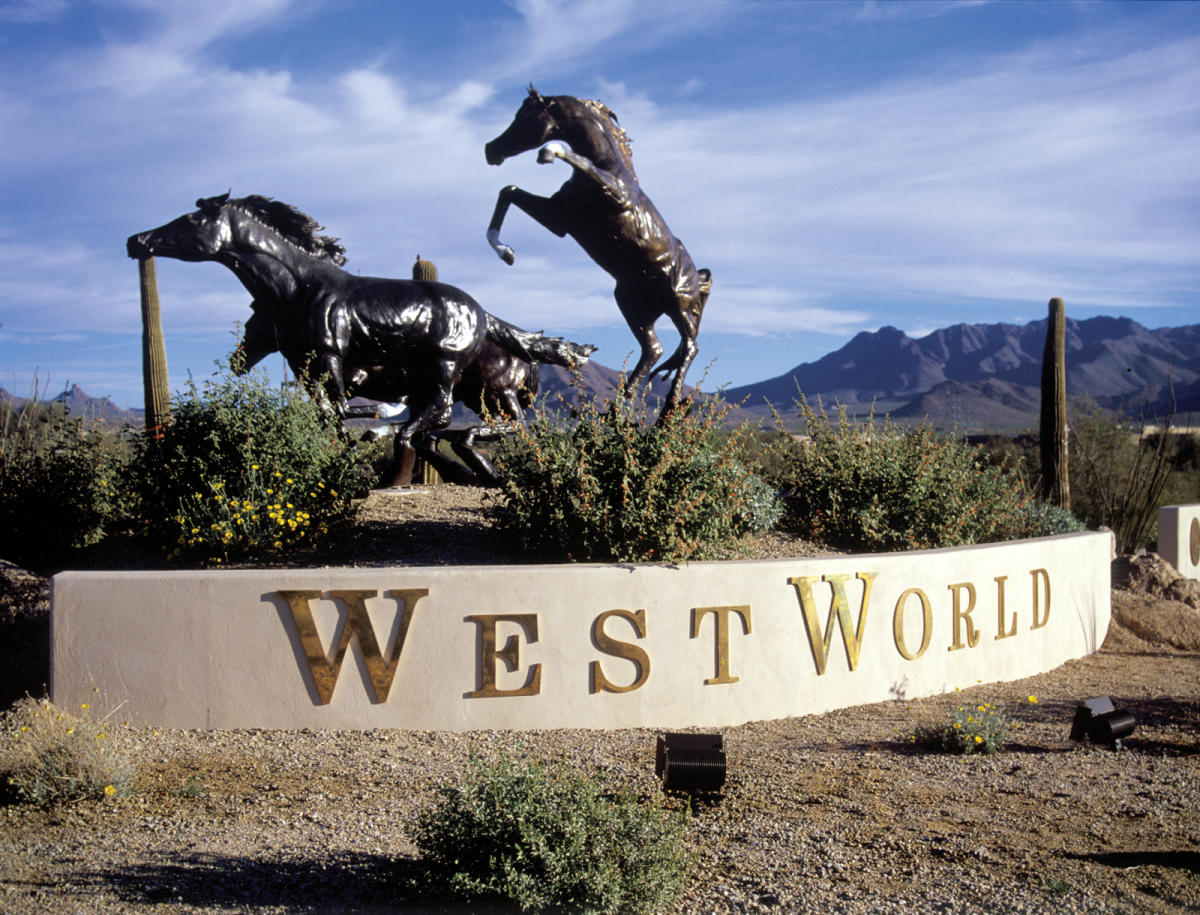
Once a program's floor plan exceeds what Tempe Mission Palms can hold, the practical next step is Phoenix Convention Center, about fifteen minutes northwest, or WestWorld of Scottsdale to the northeast, both of which offer full exhibit-hall capacity this district does not have.
In that case, downtown Tempe often still works as the lodging and social base, with the exhibit floor itself relocated and attendees shuttled or self-directed via light rail and rideshare to the larger venue.
We flag this threshold early in planning so a program does not commit to hotel-scale contracts and then discover mid-cycle that registration numbers require a bigger hall.
Sponsor and exhibitor expectations in this district
Because downtown Tempe sits at the edge of ASU's campus, exhibitors here often expect a technical, credential-heavy audience similar to the wider city, but with the added benefit of a compact, hospitality-rich setting for informal networking outside the show floor itself.
Sponsors looking for recruiting or brand visibility tend to value the district's walkability, since attendees are more likely to linger at a booth or reception when the alternative is a short walk rather than a drive.
That informal, foot-traffic-driven networking is one of the clearest differences between a downtown Tempe program and one routed to a standalone convention hall further from any walkable district.
Planning timeline for a downtown Tempe program
We start by confirming whether the expected floor plan fits inside Tempe Mission Palms or should be routed to Phoenix Convention Center or WestWorld, since that decision shapes contracting, drayage, and lodging blocks from day one.
From there we build a schedule covering booth design, AV and staging, restaurant and reception bookings on Mill Avenue, and a street-closure permit if move-in requires one, with enough lead time to adjust before contracts lock.
We also flag ASU academic-calendar conflicts, home-game weekends, and graduation periods early, since all three affect hotel rates, restaurant availability, and street traffic in this specific district more than they affect the wider city.
Frequently asked questions
Is downtown Tempe the same as Tempe Mission Palms?
Tempe Mission Palms Hotel sits inside downtown Tempe, on Mill Avenue, and functions as the district's only true event venue. Downtown Tempe is the wider walkable district around it, including restaurants, lodging, and the light rail station.
Can attendees reach downtown Tempe without a car?
Yes. The Mill Avenue/3rd Street light rail station sits inside the district and connects directly to Phoenix Sky Harbor and downtown Phoenix, which makes a car-free arrival realistic for many attendees.
How tight is load-in on Mill Avenue?
Tighter than a suburban venue. Streets are narrower and carry regular retail and restaurant traffic, so larger move-ins usually need a city street-closure permit and a scheduled dock window rather than open-ended truck access.
Where do evening receptions happen for a downtown Tempe show?
Most groups walk a few blocks from Tempe Mission Palms to a Mill Avenue restaurant or rooftop patio. Reservations should be booked well ahead of ASU home-game weekends and graduation periods, when the district gets busy.
What if our program outgrows Tempe Mission Palms?
We route the exhibit floor to Phoenix Convention Center or WestWorld of Scottsdale, both a short drive away, while keeping lodging and evening programming in downtown Tempe if the group wants to preserve that walkable base.
Is parking a problem in downtown Tempe?
It can be during weekday ASU class hours, when structured garages fill faster than a suburban lot would. Weekend programs have an easier time, and we recommend reserving parking blocks in advance for any weekday event.