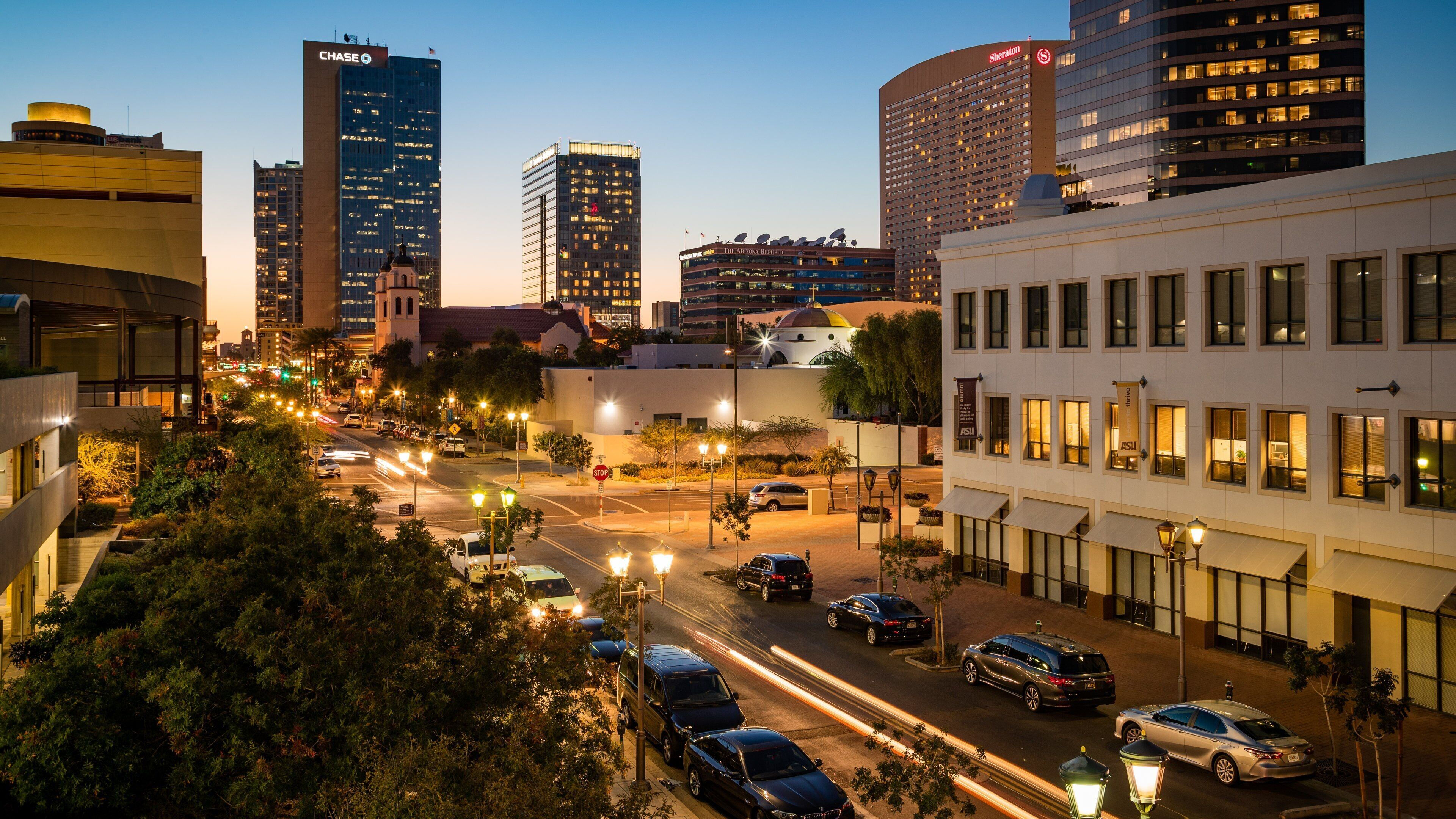
Midtown Phoenix runs roughly along the Central Avenue corridor between downtown and the north side of the city, and its most relevant feature for event planning is proximity to the Arizona State Fairgrounds campus off 19th Avenue and McDowell Road. That campus includes Veterans Memorial Coliseum, the Exhibit Building, Grandstand Arena, the Agriculture Center, the Home Arts Center, and the Wesley Bolin Building, plus outdoor plaza space, giving midtown access to far more raw floor area than downtown's convention halls carry.
Downtown remains close enough from midtown, generally a ten-minute drive south on Interstate 17 or Central Avenue, that a program can still reach the Phoenix Convention Center or Sheraton Phoenix Downtown without much added time. That makes midtown a reasonable staging point for a show that touches both the fairgrounds and downtown across the same week.
Midtown itself is mostly office towers and medical campuses rather than a hotel or entertainment district, so it rarely functions as an attendee-facing address on its own. Its role in planning is almost entirely about the fairgrounds' proximity and the routing between it and the rest of the Phoenix venue map.
Execution priorities
- Proximity to the Arizona State Fairgrounds' multiple buildings
- Ten-minute connectivity to downtown Phoenix venues
- Outdoor plaza and grandstand space for expo-format shows
- Central Avenue and Interstate 17 routing between districts
- Staging point for programs spanning fairgrounds and downtown
How Midtown Phoenix fits the Scottsdale market
Midtown Phoenix is not a hotel district or a resort corridor the way Scottsdale is, so it rarely appears as an attendee-facing address on its own. Its value in the wider Scottsdale-based planning map is almost entirely logistical: it sits closer to the Arizona State Fairgrounds than downtown does, which matters for any show that needs the fairgrounds' expo-scale floor area.
A program based out of Scottsdale that needs fairgrounds capacity typically routes crews and freight through midtown rather than downtown, since the more direct path off Interstate 17 avoids the extra downtown congestion that a Phoenix Convention Center-adjacent route would add.
The Arizona State Fairgrounds campus up close
The fairgrounds campus is genuinely several buildings rather than one hall. Veterans Memorial Coliseum offers arena-scale floor space, the Exhibit Building and Grandstand Arena add further conventional exhibit square footage, and the Agriculture Center and Home Arts Center provide smaller, more specialized halls suited to demonstrations or juried exhibits. Arizona Plaza supplies outdoor space for anything that wants demonstration area beyond a roofline.
Because these buildings operate somewhat independently within the same gate, a show booking the fairgrounds needs to specify which building or combination of buildings it needs, since dock access, floor load ratings, and rigging points vary from one to the next.
Signage and wayfinding across the campus also matter more here than at a single-building venue, since attendees moving between the coliseum and a smaller hall like the Agriculture Center are effectively walking between separate structures rather than down one connected hallway.
Distance and routing to the fairgrounds
From midtown, the fairgrounds sits a short drive west and north, generally under fifteen minutes depending on the exact starting point along the Central Avenue corridor. That is meaningfully shorter than the same trip from downtown or from a Scottsdale hotel base, which is why midtown functions as a practical staging point for fairgrounds-heavy programs.
Crews shuttling equipment or materials between a Scottsdale warehouse and the fairgrounds often route through midtown streets rather than the downtown grid, avoiding event-night congestion tied to Chase Field or Footprint Center schedules.
That routing choice tends to matter most on multi-truck moves, where a few extra minutes per trip through downtown surface streets compounds into real schedule pressure across a full day of load-in runs.
Connectivity back to downtown Phoenix
Despite its proximity to the fairgrounds, midtown still connects to downtown Phoenix in roughly ten minutes via Interstate 17 or a direct run down Central Avenue, which keeps the Phoenix Convention Center and Sheraton Phoenix Downtown within easy reach for a program that needs both districts across a multi-day event.
That short connection is what makes a split-venue program, fairgrounds for the main exhibit floor and a downtown hotel for lodging and breakout sessions, workable without an unreasonable daily commute for attendees or crew.
Outdoor and large-format program fit
Midtown's real advantage over downtown for event planning is access to outdoor and large-format space that a conventional convention hall simply does not offer. Arizona Plaza and the fairgrounds' grandstand areas suit consumer expos, agricultural or industrial equipment displays, and any format that benefits from natural light or open-air demonstration space.
Programs that need this kind of footprint but still want proximity to Scottsdale hotel inventory generally find the fairgrounds, reached through midtown, a better fit than trying to compress the same format into a downtown hall built for a different kind of show.
Outdoor space also opens up options that an indoor hall cannot, including vehicle or heavy-equipment displays and demonstrations that need open air rather than a ventilated interior, which is a recurring reason agricultural and industrial programs favor the fairgrounds specifically.
Freight and drayage through the midtown corridor
Trucks and material handling equipment routing to the fairgrounds from a Scottsdale-based warehouse generally use the midtown corridor along Interstate 17 rather than looping through downtown, which keeps freight movement clear of arena event traffic and downtown dock congestion.
Because the fairgrounds buildings each have their own dock arrangements, a drayage plan should name the specific building, Veterans Memorial Coliseum versus the Exhibit Building versus Grandstand Arena, rather than treating the fairgrounds as a single receiving point.
Hotel and lodging realities for midtown-adjacent programs
Midtown itself carries limited hotel inventory compared to downtown or Scottsdale, so programs with a fairgrounds-heavy schedule typically still house attendees in Scottsdale or downtown and treat midtown purely as a pass-through corridor for crew and freight movement.
That arrangement works because the drive between either lodging option and the fairgrounds stays under thirty minutes, short enough for a daily shuttle schedule without requiring attendee housing directly adjacent to the fairgrounds gate.
Scheduling around fairgrounds calendar events
The fairgrounds campus hosts its own recurring public events, including seasonal fairs and community programs, which can affect building availability and parking capacity well beyond a single week. A corporate or trade show booking should confirm building availability against that public calendar early, since some fairgrounds buildings book out months ahead for recurring annual events.
Midtown routing itself is not affected by the fairgrounds' public event calendar, but load-in scheduling for whichever building is booked needs to account for it regardless of which corridor crews use to arrive.
When midtown routing makes sense
Midtown is worth naming specifically in a program's logistics plan whenever the fairgrounds is the primary venue and downtown is a secondary stop, since it is the shortest practical connector between the two. It is less relevant on its own for a program that only touches the convention center or an arena downtown.
For anyone planning from Scottsdale, the useful takeaway is that a fairgrounds booking does not need to route through downtown traffic at all. The midtown corridor along Interstate 17 or Central Avenue gets crews and freight there faster.
Frequently asked questions
Is midtown Phoenix a venue district on its own?
Not really. Midtown is mostly office and medical space rather than a hotel or event district. Its relevance to trade show planning is almost entirely as the closest corridor to the Arizona State Fairgrounds campus.
How far is the Arizona State Fairgrounds from midtown Phoenix?
Generally under fifteen minutes depending on the starting point along the Central Avenue corridor, which is meaningfully shorter than the same trip from downtown Phoenix or a Scottsdale hotel base.
Which fairgrounds building should a program book?
It depends on the format. Veterans Memorial Coliseum suits arena-scale programs, the Exhibit Building and Grandstand Arena add conventional exhibit floor space, and the Agriculture Center or Home Arts Center fit smaller specialized shows. Each has its own dock and rigging setup.
Can attendees stay in midtown Phoenix for a fairgrounds show?
Hotel inventory in midtown itself is limited, so most fairgrounds-anchored programs still house attendees in Scottsdale or downtown Phoenix and treat midtown purely as a routing corridor for crew and freight.
Does the fairgrounds' public event calendar affect corporate bookings?
Yes. The campus hosts recurring seasonal fairs and public programs that can book specific buildings out months in advance, so availability should be confirmed against that calendar early in the planning process.
Why route through midtown instead of downtown for a fairgrounds show?
Midtown's Interstate 17 and Central Avenue routes reach the fairgrounds faster than a path through the downtown grid, and they avoid event-night congestion tied to Chase Field or Footprint Center schedules.