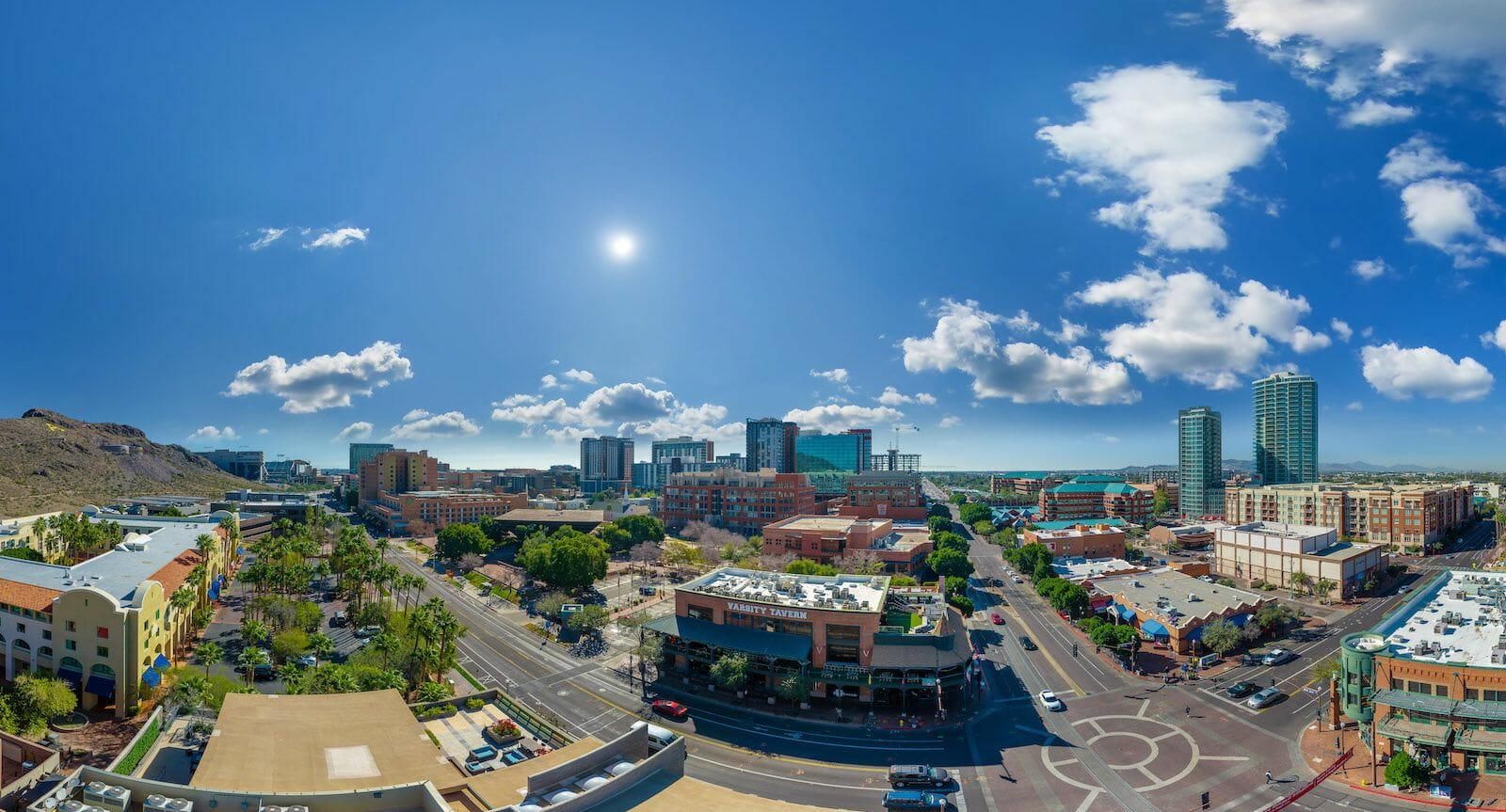
Tempe is a compact, walkable city wrapped around Arizona State University's Tempe campus, with Tempe Town Lake and the Mill Avenue corridor forming its civic core. That density means exhibitors moving between a hotel ballroom and downtown lodging can often do it on foot or by streetcar rather than by shuttle, which changes how a Tempe program is staffed and scheduled compared with a suburban site further out in the valley.
The city's own venue base is a resident hotel property rather than a standalone convention hall, so Tempe Mission Palms Hotel carries most on-site programs, while larger shows lean on Phoenix Convention Center to the northwest or WestWorld of Scottsdale to the northeast. Planning a Tempe event usually means deciding early whether the audience and floor plan fit inside a hotel footprint or need a full exhibit hall nearby.
ASU's research strength in semiconductors, aerospace, biosciences, and software gives Tempe a genuinely different exhibitor and attendee mix than a resort-town location, and that academic and startup presence shapes booth design requests, sponsorship conversations, and the kind of AV support a Tempe program tends to ask for.
Execution priorities
- Hotel-based programs at Tempe Mission Palms
- University-adjacent audience from ASU's Tempe campus
- Walkable load-in between Mill Avenue lodging and venue
- Overflow coordination at Phoenix Convention Center or WestWorld
- Tech and bioscience exhibitor mix
How Tempe fits the Scottsdale-area market
Tempe reads differently than the resort corridor to the northeast. Where Scottsdale programs lean on golf-resort ballrooms and a leisure-adjacent attendee base, Tempe draws on a university population, a startup and tech-services economy, and a downtown that functions on weekday foot traffic rather than tourist volume.
That distinction matters for scheduling. A Tempe program that draws mainly weekday ASU-adjacent attendance behaves more like a business conference than a destination show, and the vendor list, catering windows, and AV needs should reflect that rather than copying a resort-market template.
Sponsors also read Tempe differently. A company recruiting engineering or research talent will get more out of a Tempe-based program than a resort-town show, since the walk-in audience already skews toward the technical background those sponsors are trying to reach.
Tempe Mission Palms as the anchor venue
Tempe Mission Palms Hotel sits on Mill Avenue a few blocks from the ASU campus and functions as the closest true event venue inside Tempe itself. Its ballroom and meeting space suit corporate conferences, sponsor dinners, and mid-size programs that do not need a full exhibit hall.
For a program sized to a hotel footprint, this keeps load-in short and lets exhibitors, speakers, and attendee lodging sit within walking distance of each other, which is not something the larger convention venues in the valley can offer.
The property's courtyard and breakout rooms also give organizers room to split a program into a general session plus smaller workshop tracks, which suits the mix of corporate and academic attendees a Tempe program usually draws.
When a Tempe program needs a bigger hall
Once a show grows past what a hotel ballroom can hold, the next step is usually Phoenix Convention Center, roughly a fifteen-minute drive northwest, or WestWorld of Scottsdale, a similar distance to the northeast. Both offer full exhibit-hall square footage and drayage infrastructure that Tempe itself does not have.
We treat that decision early in planning rather than late: a program that outgrows Tempe Mission Palms mid-cycle costs more to relocate than one scoped correctly from the start.
As a rough guide, programs under roughly two hundred exhibitor booths often still work inside the hotel footprint, while anything larger benefits from the marshaling yard and dock capacity a full convention venue provides.
Load-in and drayage from Tempe
Freight moving into a Tempe hotel program typically stages through a loading dock sized for banquet and catering deliveries rather than semi-trailer exhibit freight, so crate size and dock scheduling need to be confirmed with the property well ahead of move-in.
For programs routed to Phoenix Convention Center or WestWorld instead, drayage follows those venues' own dock and marshaling-yard procedures, and Tempe functions as staging and lodging rather than the freight point itself.
Advance warehouse coordination still makes sense for a Tempe program even at hotel scale, since holding crated freight offsite until a confirmed move-in window avoids clogging a dock that also has to run banquet service that day.
Hotel and lodging near Tempe
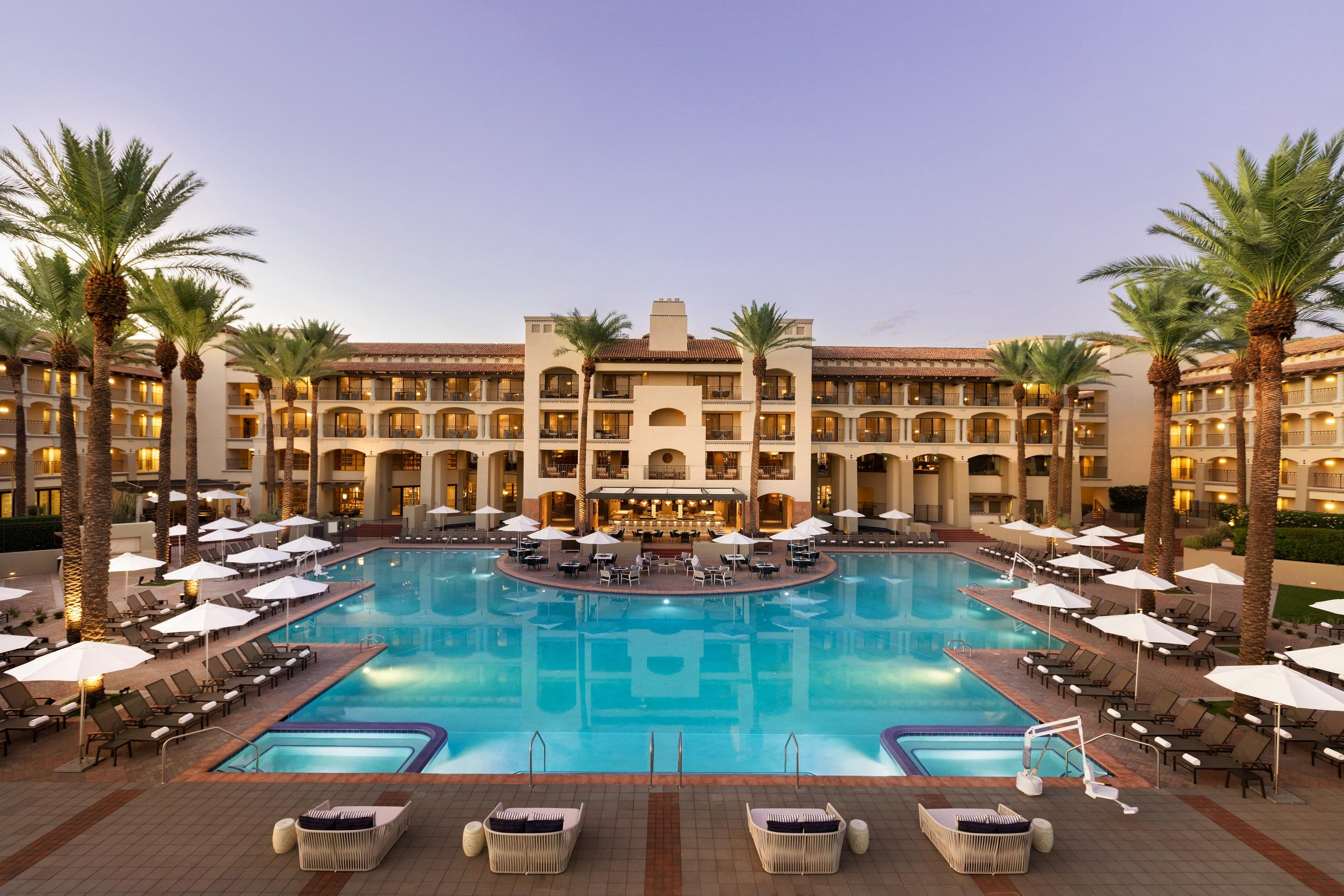
Beyond Tempe Mission Palms itself, Mill Avenue and the area around Tempe Town Lake carry additional hotel inventory that puts attendees within a short walk or rideshare of the venue, which keeps a Tempe program's transportation budget lower than a suburban site would.
Groups routed to Phoenix Convention Center or WestWorld for the exhibit floor sometimes still base lodging in Tempe and shuttle attendees in, particularly when a program wants to keep an ASU-adjacent evening social program going alongside the show.
That split arrangement, hotel block in Tempe with a shuttle to the exhibit venue, tends to work best when the show day ends early enough to leave time for a Mill Avenue dinner or sponsor reception afterward.
Industry mix drawn from Tempe
ASU's research output in semiconductors, aerospace and defense, biosciences, and software gives Tempe programs a technical, credential-heavy attendee base. Booth conversations here skew toward product demos, research posters, and recruiting rather than retail-style sales pitches.
That mix also brings university labs, startup incubators, and corporate research partners into the sponsor pool, which changes what an exhibitor asks for in terms of power, bandwidth, and demo space compared with a general consumer show.
Graduate programs and campus research centers frequently want poster-board space alongside standard booths, so we plan floor layouts in Tempe with a mixed format in mind rather than a uniform grid of identical exhibitor booths.
Booth and stage needs for a Tempe audience
A university-adjacent audience tends to expect working demos over static signage, so AV planning for Tempe programs usually includes more power drops and network bandwidth per booth than a comparable show elsewhere in the valley.
Stage content also skews toward technical talks and panel formats rather than pure keynote theater, which affects how much of the floor plan needs to be given over to a breakout or theater-style session area.
Lighting and LED wall requests for Tempe programs skew functional over spectacle, supporting slide decks and live demos clearly rather than building an entertainment-style stage set, which keeps production budgets closer to conference norms than concert norms.
Parking and access around Tempe Mission Palms
Mill Avenue's structured parking serves the hotel and surrounding blocks, and attendees arriving by light rail can reach the area directly, which is a genuine advantage over venues that depend entirely on surface parking lots.
Move-in access for smaller crews works well given the compact footprint, though larger production trucks should confirm dock dimensions and street-closure needs with the hotel and the city in advance.
Weekday events also compete with ASU class-schedule traffic on Mill Avenue and around campus, so we build in extra time for crew and vendor arrival on move-in day rather than assuming suburban-level street access.
Planning timeline for a Tempe program
We start by confirming whether a program's expected floor plan and attendance fit inside Tempe Mission Palms or need to be routed to Phoenix Convention Center or WestWorld, since that decision drives everything downstream from contracting to drayage.
From there we build a working timeline covering booth design, AV and staging, freight scheduling, and lodging blocks around Mill Avenue, with enough lead time to adjust venue scope if registration numbers shift before the show date.
We also flag ASU academic-calendar dates early, since parking, lodging rates, and street traffic around Tempe shift noticeably during move-in week, finals week, and major campus events, and a show date that overlaps one of those can affect crew access and hotel availability.
Frequently asked questions
Is there a full exhibit hall inside Tempe itself?
No. Tempe's own event space is centered on Tempe Mission Palms Hotel, which suits hotel-scale conferences and sponsor programs. Anything needing a full exhibit hall typically routes to Phoenix Convention Center or WestWorld of Scottsdale, both a short drive from Tempe.
How far is Tempe from Phoenix Convention Center?
Roughly a fifteen-minute drive northwest under normal traffic, which makes it practical to lodge a group in Tempe and shuttle to the convention center for the exhibit floor while keeping evening programming closer to Mill Avenue.
What kind of audience does a Tempe program draw?
Because ASU's main campus sits inside Tempe, programs here tend to draw a university-adjacent, technical crowd with strength in semiconductors, aerospace, biosciences, and software, rather than a general consumer or leisure-driven attendee base.
Can attendees walk between lodging and the venue?
Yes, for hotel-scale programs based at Tempe Mission Palms. Mill Avenue lodging and the light rail stop sit within easy walking distance, which is one of the practical advantages of a Tempe-based program over a suburban venue.
Does Tempe Mission Palms handle exhibit freight?
Its loading dock is sized for catering and banquet deliveries rather than semi-trailer exhibit freight, so crate sizes and delivery windows need confirmation ahead of move-in. Larger freight loads are usually better suited to Phoenix Convention Center or WestWorld.
When should we decide between Tempe and a larger venue?
As early as possible. A program that starts at hotel scale and later outgrows Tempe Mission Palms costs more to relocate mid-cycle than one scoped to Phoenix Convention Center or WestWorld from the outset, so we size the venue against expected floor plan before contracting.